How do you make a 4,000-ton building move? Thornton Tomasetti Principal Tom Duffy is featured in an ASME video exploring the engineering collaboration behind The Shed in New York City.
In the heart of Silicon Valley, a team from our Applied Science practice is crossing disciplinary boundaries, applying their engineering expertise to aid in the advancement of medical science.
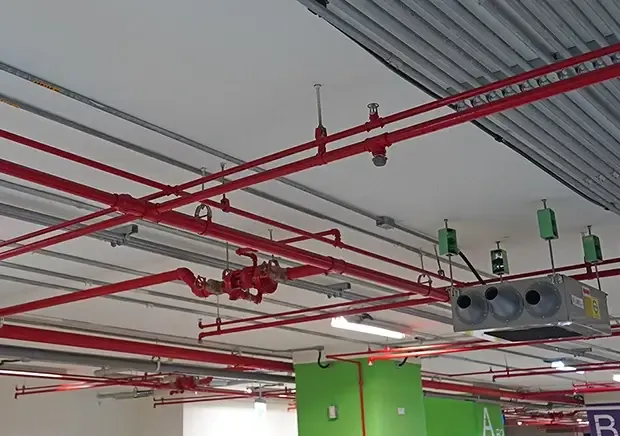
Kylie Schalz addresses building codes and the design and performance of passive and active life safety systems, including fire protection, means of egress, smoke control, and fire suppression.
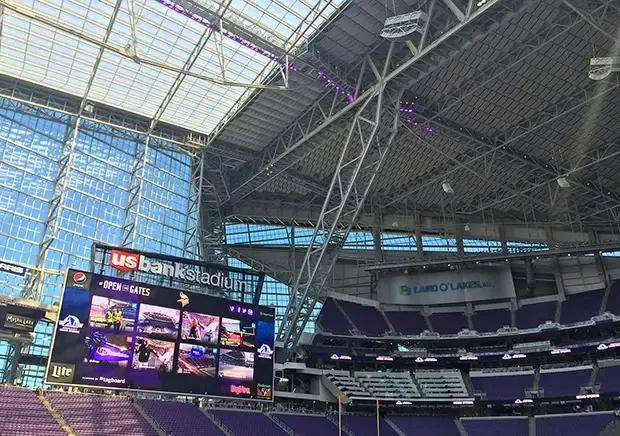
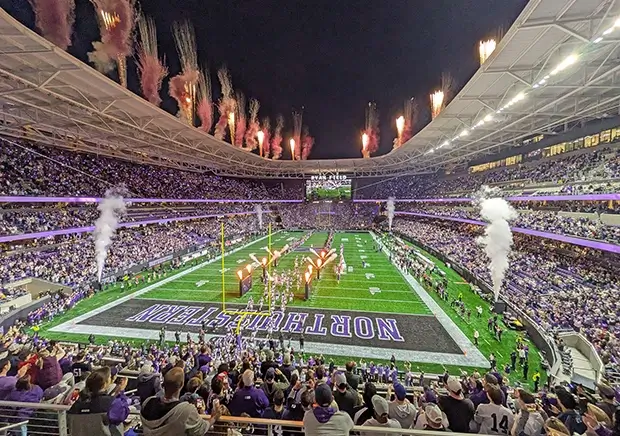
Thornton Tomasetti expert R. John Aniol co-authored a paper on the structural design and delivery of U.S. Bank Stadium in Minneapolis, focusing on the steel structure supporting the stadium’s transparent roof and the collaboration required to bring the complex long-span design to life.
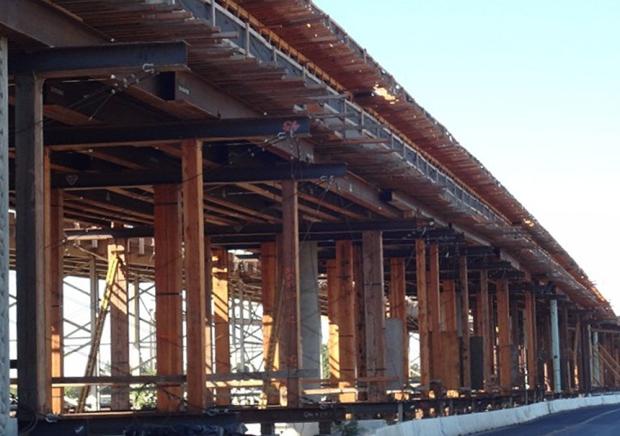
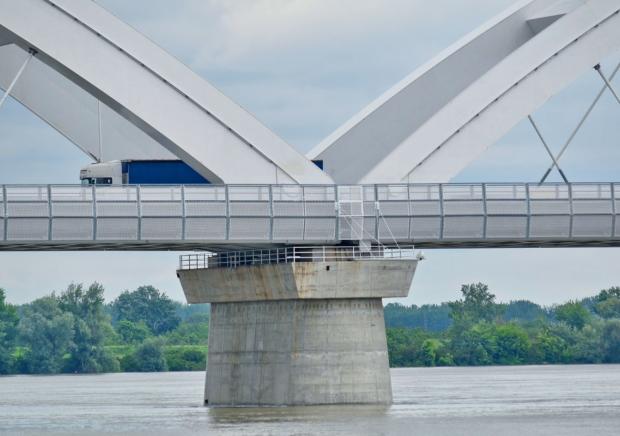
Multi-span cast-in-place (CIP) post-tensioned concrete (PS) box girder bridges undergo upward deflection (curl) at hinges due to post-tensioning forces. Adjustments in falsework height are often necessary in the field to address the curl and avoid bumps, which cause traffic safety concerns and present a road hazard. A current method to estimate hinge curl has often led to results that are significantly different than those measured in the field thus causing construction delays and costly change orders.
This paper discusses the laboratory testing of wall-like reinforced concrete (RC) columns externally confined with glass fiber reinforced polymer (GFRP) laminates and subjected to pure axial load. Specimens were characterized by an overall length of 3.05 m (10 ft), cross-sectional dimensions of 356 by 1,041 mm (14 by 41 in). Three specimens were tested: one was unstrengthened (benchmark) and two were confined with GFRP laminates. Two different confining reinforcement ratios were considered.
Accurate prediction of instantaneous and time-dependent deformation of superstructure in-span hinges is important for preventing a mismatch of bridge decks. Time-dependent deflection of in-span hinges hinge curl in posttensioned bridges depends on the construction sequence and the material time-dependent properties. Structural analysis software is an important tool for estimating time-dependent deformations. Computational modeling was conducted to calculate the hinge curl in posttensioned bridges considering two approaches, the spine model and the three-dimensional finite-element model.
Performance based fire engineering has recently been the focus of several studies due to its well-known benefits and the short-comings of the traditional prescriptive design methods. However, the method is not often used extensively because of the large number of parameters and decisions involved in the process. This study presents a framework to conduct a number of sensitivity analyses to help the engineer determine which of several parameters used in a performance based design can affect the outcome significantly.